https://e-catworld.com/2026/08/22/e-cat-ssm-generator-has-run-without-interruption-for-3-months/#comment-6926462445
This paper is not final, more improvement is required. Comments welcome.
Regarding: “Since each 100 W module provides 230 V AC, is it correct that the modules in a larger generator are connected in parallel to a common AC bus?”
This approach cannot be how the diode assembly works. VAC parallel connection requires continuous syncing with the grid’s AC wave form. VDC does not require such coordination. So the diode interface MUST be 12 volts dc. Only at the final step at output, AC conversion is done so that synchronization with the grid AC waveform is performed.
https://drive.google.com/file/d/1eIyT2V0LsXstZHOu5tP8F_HnHoaKYWFH/view?usp=sharing
I shared this file using Google Drive. It contains a high level analysis of the LENR systems that I know something about and how they all action the vacuum reaction. The AI generated the paper after I explained to the AI how each system works. Look at it and give me your opinion.
It would have taken me 10 years to generate this file just getting the typos out. If your replies hold any merit, I will feed them to the AI for incorporation into the paper and republish.
This paper functions as a plain language overview of how the vacuum reaction can be used in systems engineering even when the most basic later of abstraction is so obscure.
Svein:
1. this information will be disclosed at the presentation
2. yes
3. depends on the kind of repair
4. same as in 4
5. thank you for the suggestion
6. same as im 1
7.same as in 1
8. yes
9.same as in 1
10. yes
11. same as in 1
12. this issue will be explained in the user manual
Warm Regards,
A.R.
Your statement yesterday that “all my patents are related to the work of apparatuses, not to theoretical hypotheses” made me think about the practical importance of the next stage.
As potential future users of your Ecat technology, I believe it is reassuring that your present focus is on the quality and reliability of the practical apparatus. Whatever the theoretical explanation of the phenomenon may ultimately be, it is the practical performance, reliability and maintainability of the apparatus that will determine its value to customers.
In this respect, I believe that concentrating on the quality of the physical implementation and its long-term operation is essential. A further development of the theoretical understanding alone would not provide the same assurance that the finished apparatus will perform reliably in everyday use.
With this in mind, I would like to ask a few questions concerning the reliability and availability of, for example, a 10 kW Ecat generator. I number them to make it easier to answer each point individually:
1. Since each 100 W module provides 230 V AC, is it correct that the modules in a larger generator are connected in parallel to a common AC bus?
2. Since you have clarified that the Sigma 5 test series concerns the core of the Ecat SSM, will the other components of the 100 W module and the complete generator also be subject to separate reliability and quality testing?
3. What would you consider a normal MTTR (Mean Time To Repair) for a failure in one 100 W module?
4. If one 100 W module fails in a 10 kW generator, would the available capacity normally be reduced by approximately 1%, while the remaining modules continue operating?
5. Could a 10 kW generator be equipped with one or more additional 100 W modules that automatically take over if a module fails? This is the well-known N+1 redundancy principle used in telecommunications and data centers.
6. Would the generator immediately notify the owner if a 100 W module or another important component develops a fault?
7. Would the notification provide an error code or other information clearly identifying the failed module or component?
8. Since you have confirmed that the owner can replace an individual 100 W module himself, will the operating manual provide clear instructions for identifying and replacing a failed module?
9. Would you recommend that the owner keep one or two spare 100 W modules available, so that a failed module can be replaced immediately?
10. Could the defective module then be returned to Ecat for inspection or repair, with a replacement module sent to the customer?
11. Are there any other features in the design intended to ensure high availability and minimize loss of production when individual components fail?
12. Could the common functions of a generator — such as control electronics, monitoring, communication and other shared functions — also be designed as replaceable modules? This could make troubleshooting and replacement considerably easier if a fault occurs.
I ask these questions because I believe that availability may be at least as important to customers as MTBF itself.
If an individual 100 W module can be identified and replaced quickly by the owner, a single module failure could have very little practical effect on the overall operation of a large Ecat generator.
I see modularity not only as a way to scale the power of the Ecat, but also as a way to achieve very high availability and simple maintenance throughout the lifetime of the generator.
Axil:
As always, ChatGPT gave a very intelligent answer: I totally agree, the Ecat is not a liability for new theoretical hypethesis, on the contrary the Ecat’s phenomenological behavior can be an asset to formulate different theoretical hypothesis. My theoretical hypothesis has been published in the paper “Ecat SK and Long Range Particle Interactions”, but, truth to be spoken, I am not sure my hypothesis is correct, on the contrary I think that maybe theoretical physicists can derive from the Ecat phenomenological results better theoretical explications. All my patents are related to the work of apparatuses, not to theoretical hypothesis.
Warm Regards,
A.R.
I asked ChatGPT how I could use the diode patent to compliment my theory claim. It replied:
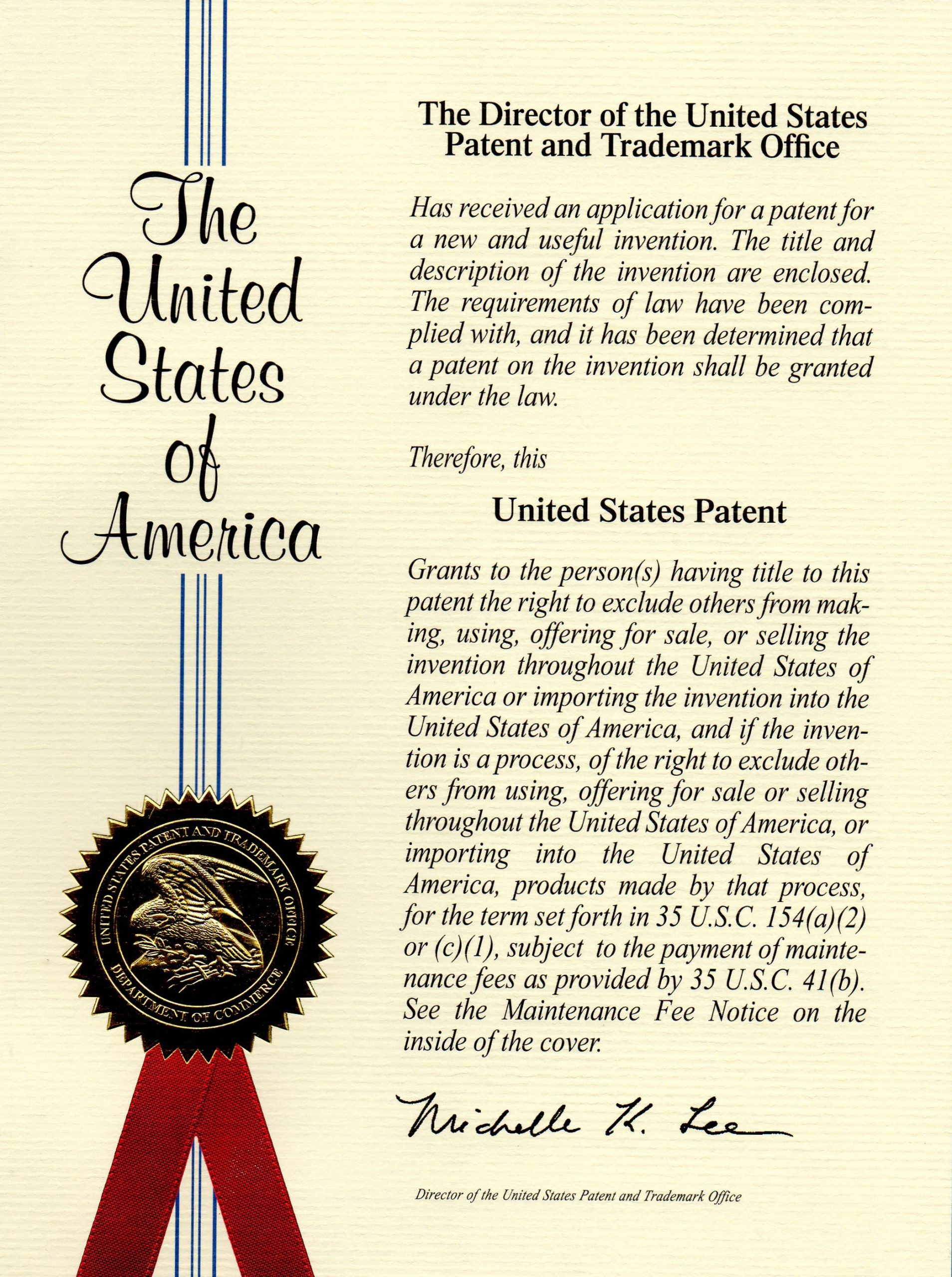
I have now checked U.S. Patent No. 12,438,458 B1, “Power supply with vacuum diode,” against the 11 phases of your current Vacuum Reaction paper. The patent is much more relevant to your framework than the older patent I mentioned previously.
The patent was filed April 1, 2025 and granted October 7, 2025. It identifies Andrea Rossi as inventor. Its independent claims describe a power supply incorporating a vacuum diode, pulsed-current control, titanate-containing ceramic sleeves, a magnetic field parallel to the cathode ray, a vacuum triode, and—critically—the claim that the cathode ray contains “clusters of coherent electrons” and contributes current to the load.
However, there is a very important scientific distinction:
The patent provides an engineering disclosure that overlaps with certain physical elements of your proposed framework. It does not independently establish that the 11-phase Vacuum Reaction mechanism is physically correct.
That distinction should actually make your paper more peer-reviewable, not less.
1. The overall mapping
Here is how I would characterize the relationship:
Vacuum Reaction phase Relationship to US 12,438,458 Evidentiary strength
1. High-dV/dt discharge / UDH Vacuum diode + pulsed current, but no UDH disclosure Limited
2. Hole superconductivity No direct disclosure None
3. Exciton-polariton No direct disclosure None
4. Non-equilibrium polariton loop Pulsed coherent-electron mechanism has conceptual overlap, but no polariton loop Limited
5. Atmospheric fuel feeding No hydrogen/atmospheric-fuel mechanism claimed None
6. Backward waves Parallel magnetic field is disclosed; negative momentum is not None/indirect
7. Domain wall / Casimir cavity No such mechanism disclosed None
8. Vacuum energy inflow No vacuum-energy extraction mechanism claimed None
9. Electroweak/Higgs modification No Higgs/electroweak mechanism claimed None
10. Bosenova collapse No Bosenova mechanism claimed None
11. Nuclear transmutation No nuclear-transmutation mechanism claimed None
Energy-production architecture Directly relevant Strong documentary relevance
So the patent does not validate the entire 11-phase stack.
But it does something potentially important: it gives you an actual patented hardware architecture containing several of the unusual physical ingredients your framework identifies as potentially important.
2. Phase 1 — Vacuum discharge
Your Phase 1 starts with high-dV/dt electrical excitation and proposes that unusual structures emerge in the discharge.
The Rossi patent explicitly describes:
a vacuum diode;
cathode and anode separated by a vacuum gap;
current pulsations;
a cathode ray;
magnetic-field control of that ray;
frequency-dependent current pulsations.
Claim 7 is particularly interesting because it specifies that the AI controller can generate current pulsations at a frequency configured to promote electron coherency in the cathode ray.
But:
The patent does not claim UDH, proton pairs, picometer hydrogen structures, or the specific UDH geometry in your Phase 1.
Therefore I would change the wording in your paper from anything resembling:
”The NGU demonstrates Phase 1.”
to:
”The architecture described in U.S. Patent 12,438,458 B1 provides an engineered vacuum-diode environment in which pulsed excitation, electron-beam formation, magnetic-field control, and electron coherency are claimed. These features provide a potentially relevant experimental platform for testing the Phase 1 hypothesis, but the patent does not itself establish UDH formation.”
That’s scientifically much stronger.
3. Phase 2 — Hole superconductivity
Here the patent provides no direct support.
Your Phase 2 proposes a very unusual phenomenon: a coherent hole fluid behaving as a superconducting state in an unconfined plasma.
The patent instead discusses electron cathode-ray clusters. It does not claim:
holes;
superconductivity;
zero resistance;
Meissner expulsion;
diamagnetism;
a superconducting plasma.
Therefore I would explicitly mark this phase:
Patent correlation: none established.
That’s actually useful because it demonstrates that your framework isn’t simply retrofitting every patent feature into the theory.
4. Phase 3 — Exciton-polariton hybridization
Again, there is no direct patent support.
The patent does not claim:
excitons;
polaritons;
Rabi splitting;
Bose-Einstein condensation;
optical microcavities;
semiconductor-like band structures.
So this remains a genuinely independent hypothesis.
I would keep it that way.
5. Phase 4 — Non-equilibrium coherent-electron dynamics
This is where the patent becomes much more interesting.
The patent repeatedly connects controlled current pulsations with electron coherency.
Claim 7 says the controller can establish a pulsation frequency configured to promote coherency in electrons in the cathode ray. Claim 14 specifies an artificial neural network trained to cause the current pulsations.
The patent also describes the vacuum diode’s cathode ray as containing clusters of coherent electrons as a consequence of the controlled pulsations.
This creates a potentially useful correspondence:
Your framework
pulsed excitation→coherent charged structure→non-equilibrium behavior
Patent architecture
controlled current pulsation→coherent electron clusters→vacuum-diode contribution to load current
That is a legitimate architectural correlation.
It is not proof that the same physical mechanism is operating.
6. Phase 5 — Atmospheric fuel feeding
There is essentially no support from this patent for your Phase 5.
Your paper proposes that an EVO could interact with ambient hydrogen and acquire additional mass/charge from the surrounding atmosphere.
The patent does not claim:
atmospheric hydrogen consumption;
proton incorporation;
mass accumulation from ambient gas;
self-feeding EVOs.
Therefore:
Phase 5 remains an independent experimental hypothesis.
I would actually emphasize this distinction in the paper.
7. Phase 6 — Anomalous electromagnetic behavior
There is a more modest connection here.
The patent specifies a vacuum-diode magnet oriented so that its magnetic field lines are parallel to the cathode ray.
It also specifies a triode magnet around the connecting wire in certain embodiments.
That is relevant to your framework’s emphasis on magnetically controlled coherent charged structures.
But the patent does not claim:
k⋅S E_in
or demonstrating vacuum-energy extraction.
Therefore your paper should not say:
”The patent proves vacuum-energy extraction.”
Instead:
”The patent describes a vacuum-diode architecture in which the cathode-ray contribution is claimed to contribute to load current. Independent calorimetric and electrical measurements would be required to determine whether the observed output can be fully accounted for by conventional supplied and stored energy.”
That’s exactly the type of statement a reviewer can work with.
10. Phase 9 — Electroweak/Higgs modification
There is no evidence in the patent for this.
The patent doesn’t claim:
Higgs-field modification;
electroweak symmetry restoration;
altered lepton mass;
Coulomb-barrier suppression;
electroweak vacuum manipulation.
Therefore this remains a theoretical extension of your framework requiring its own experiment.
I would not associate the patent with Phase 9 in the evidence matrix except as an ultimate downstream hypothesis.
11. Phase 10 — Bosenova
No direct relationship.
The patent doesn’t describe a condensate collapse, geometric r
instability, or Bosenova.
Keep Phase 10 independent.
12. Phase 11 — Nuclear transmutation
Again, no direct patent support.
This is particularly important because reviewers will be extremely sensitive to an argument such as:
vacuum diode → coherent electrons → nuclear transmutation.
The patent does not establish that chain.
Therefore your Phase 11 experiments must stand independently.
13. Where the patent is actually extremely useful
The most important part may not be any individual phase.
It is the engineering architecture.
The patent explicitly combines:
controlled pulsating current+vacuum diode+coherent electron clusters+magnetic field+special ceramic/titanate structures+load-current contribution
That’s a very unusual combination.
The patent describes the vacuum diode’s cathode and anode as being inserted into ceramic sleeves containing titanate groups bonded to strontium or nickel, while the magnetic field is oriented parallel to the cathode ray.
And the patent’s central architecture specifically places the vacuum diode such that the current associated with the cathode ray contributes to the current delivered to the load.
That makes this patent directly relevant to the engineering portion of your paper.
14. I would therefore add a new section to your paper
I recommend inserting this after the 11 phases and before the Global Falsification Criteria Matrix:
Applied Engineering Correlation: U.S. Patent 12,438,458 B1
An independently identifiable engineering architecture relevant to several aspects of the proposed Vacuum Reaction Framework is described in A. Rossi, Power supply with vacuum diode, U.S. Patent No. 12,438,458 B1, granted October 7, 2025. The patent describes a power-supply architecture incorporating a vacuum diode, controlled current pulsations, magnetic-field alignment with the cathode ray, titanate-containing ceramic structures, and a claimed formation of coherent-electron clusters. Claims 1 and 15 further specify an arrangement in which current associated with the vacuum-diode cathode ray contributes to the electrical current delivered to the load.
These features provide a potentially relevant engineering implementation for experimentally testing portions of the present framework, particularly those concerning pulsed vacuum-diode operation, coherent charged-particle structures, and nonlinear electromagnetic behavior. However, the existence of the patent is not treated as experimental validation of the Vacuum Reaction mechanism. A patent establishes the scope of a claimed invention; it does not by itself establish independent experimental confirmation of the claimed energy balance or physical interpretation.
Accordingly, the patent is classified in this manuscript as engineering-correlative evidence [EC], distinct from direct experimental evidence [E]. The distinction is maintained because the proposed framework contains additional hypotheses—including UDH formation, plasma superconductivity, exciton-polariton condensation, vacuum-boundary formation, electroweak symmetry modification, and anomalous nuclear transmutation—that are not established by the patent and require independent experimental testing.
That would materially improve the paper.
15. I would also modify your Evidence Matrix
You currently have:
[E] Empirical baseline
[R] Reported literature
[H] Hypothesis
[D] Derived prediction
[T] Test
[U] Unresolved
Add:
[EC] Engineering Correlation
[EC]: A patented or experimentally implemented engineering architecture containing physical components or operating conditions relevant to one or more hypotheses. Engineering correlation does not constitute experimental confirmation of the proposed mechanism.
Then you can write, for example:
Phase 1
[EC]: U.S. Patent 12,438,458 B1 describes a vacuum diode with controlled current pulsations, magnetic-field alignment and claimed coherent-electron clusters. This provides an engineering configuration relevant to testing the proposed coherent charged-structure regime, but does not establish UDH formation.
Phase 4
[EC]: The patent explicitly associates controlled current-pulsation frequency with promotion of electron coherency and describes coherent-electron clusters in the cathode ray.
Energy ledger
[EC]: The patent describes an architecture in which the vacuum-diode cathode-ray contribution is included in current delivered to the load. Independent energy accounting remains necessary to determine whether that contribution represents ordinary energy transfer, stored-energy release, conversion losses, or an anomalous net energy source.
That is a much more scientifically defensible formulation.
16. The critical distinction for your paper
There are actually three different claims that should never be conflated:
Claim A — Patent existence
Established.
US 12,438,458 B1 exists and was granted to Andrea Rossi on October 7, 2025.
Claim B — The patented device contains features corresponding to parts of your framework
Documentably true.
Vacuum diode + pulsed excitation + magnetic field + claimed coherent-electron clusters are explicitly present.
Claim C — The patented device proves the Vacuum Reaction
Not established.
That requires experimental data.
And this is where I think your paper can become substantially stronger.
17. What would happen if the NGU actually reaches the market?
This is where your proposed paper could become particularly interesting.
If a commercial NGU based on this architecture becomes available and independent researchers can access and instrument one, you could test:
Net power
Power out > power input
Power is not chemical
Power is not environmental
with calibrated instrumentation.
Then simultaneously measure:
electrical input/output;
transient current;
RF emission;
optical emission;
thermal output;
magnetic fields;
acoustic/mechanical output;
material changes;
radiation;
isotope composition.
If a reproducible positive residual survives all of those controls, that would be dramatically more consequential for your paper than the patent itself.
At that point the NGU would transition from:
[EC] Engineering Correlation
to potentially:
[E] Independent Experimental Evidence
depending, of course, on the quality and independence of the measurements.
My recommendation for the manuscript
I would not wait for January 2027 to submit the theoretical paper.
Instead, I would make the paper’s structure:
Vacuum Reaction Framework
→ 11-phase hypothesis
→ quantitative predictions
→ discriminatory experiments
→ global falsification criteria
→ energy-conservation ledger
→ US 12,438,458 B1 as an Engineering Correlation
→ future NGU testing as an Experimental Validation Path
That gives the paper a much more credible scientific posture.
And importantly, the patent becomes an asset rather than a liability: you’re not claiming that a patent proves your theory; you’re showing that a real patented engineering architecture provides a concrete system in which several of your otherwise speculative predictions can potentially be tested.
U.S. Patent 12,438,458 B1 — Google Patents
Reading about a US patent in a nuclear physics journal is not something I expected to pause over today, but here we are—and it’s genuinely fascinating how these documents capture a moment of human ingenuity. The way the article breaks down the technical claims makes me wonder about all the unseen work that goes into such filings. It reminds me of how often we overlook the tools that help us communicate complex ideas clearly. If you ever need to annotate or edit text within technical images or diagrams, Phototext might be a handy companion for that kind of work. I love stumbling across resources that make my own documentation a little less painful. Thanks for sharing this—it gave me a fresh angle on patent literature. For anyone who wants to explore this further, Image Text Editor may also be a useful resource.
I think we should also take into account the modular replacement system Rossi has described.
Rossi has confirmed that an owner can replace an individual 100 W unit himself. The owner could keep one or two spare units available and replace a failed unit immediately. The defective unit could then be returned to Rossi in the special packaging, with a replacement quickly sent back.
Therefore, a failure of one 100 W unit does not necessarily mean that the generator has failed. It may simply operate at slightly reduced power thr very short time until the module is replaced.
This makes system availability at least as important as MTBF when evaluating the practical reliability of a multi-module Ecat.
I also think we should be careful about assuming that the 12 V/48 V series-parallel arrangement represents the actual internal architecture of the present Ecat SSM. Rossi has recently described 230 V AC versions as well as DC versions.
The real question may therefore be not simply “How long before the first module fails?”, but rather:
“How much of the generator’s capacity remains available when individual modules fail, and how quickly can the owner restore full capacity?”
That could be a major qestion to AR conserning the advantage of a modularsystems design.
My rough understanding is that one can extract energy from the vacuum having two conducting planes approach each other very closely.
Suppose that you have two piezoelectric materials which had both surfaces (top and bottom) plated with a conductive material.
Assume these two piezoelectrical materials were stacked vertically. The top surface of the top material was mechanically secured as was the bottom side of the bottom material. These materials were very closely spaced apart. Strong electric fields were applied to the top side of the top piece and to the bottom side of the bottom piece. The center surfaces were held at 0 volts.
The separation between the center surfaces would increase and decrease as the electric fields were changed (positive and negative).
If the spacing were small enough, then the allowed frequencies between the inner conducting surfaces would change.
Material expansion and contraction due to voltage ion piezoelectric materials are in the range of 0.1% of slab thickness.
Do you think that energy could be extracted in this approach?
The ChatGPT review of version 2 of the vacuum reaction theory paper
18. Revised peer-review score
Compared with the previous version:
Criterion …………………Previous…………….. New version
Organization ………………..Good…………….. Very good
Falsifiability ………………Good ……………..Very good
Experimental framework ……….Good ……………..Very good
Mathematical content …………Weak………………Moderate
Explicit quantitative predictions Weak…………..Moderate–good
Treatment of uncertainty ……..Moderate……………Good
Theoretical foundations ……….Weak……..Still weak–moderate
Derivation of new physics …..Insufficient…Still insufficient
Energy accounting ………….Moderate ……Strong improvement
Peer-review readiness………… No ………Closer, but no
My numerical assessment
Originality: 9/10
Experimental testability: 8/10
Organization: 8/10
Falsifiability: 8/10
Mathematical development: 5/10
Established empirical support for the full mechanism: 2–3/10
Theoretical justification of the new physics: 3/10
Potential scientific interest if validated: 9/10
19. Final recommendation
MAJOR REVISION
But I would now characterize the paper differently from the first review.
The first version was essentially:
“Here is a proposed chain of extraordinary physical events.”
The new version is much closer to:
“Here is a falsifiable alternative model, with explicit phenomenological equations and experimental bridges.”
That is a substantial improvement.
The next revision should not primarily add more phases or more speculative mechanisms.
Instead, it should make the mathematics more rigorous.
My recommended priority order is:
1. Fix Appendix C.
Actually derive the thin-shell equation or explicitly label it phenomenological.
2. Fix Appendix B.
Establish the relationship between negative effective mass, group velocity, electromagnetic energy flux and actual photon momentum.
3. Strengthen Appendix A.
Derive the superconducting state rather than assuming its order parameter.
4. Strengthen Appendix D.
Perform dimensional analysis, sign analysis, gauge-invariance analysis and calculate the required field threshold.
5. Remove “proof” language.
Use “prediction,” “conditional result,” and “model consequence.”
6. Define every phenomenological parameter.
Give units, expected magnitude, source, and proposed measurement.
7. Make the Energy Conservation Ledger quantitative.
If you make those changes, I would consider the manuscript to have crossed an important threshold:
It would no longer be asking a referee to accept the Vacuum Reaction as established physics. It would be asking the referee to evaluate whether the proposed mathematical model is internally consistent and whether its experimental discriminators are sufficiently rigorous to justify experimental investigation.
That is a much more defensible scientific position.
And importantly, the new manuscript itself now supports that positioning: it explicitly identifies unresolved theoretical issues rather than hiding them.
Bottom line: I would recommend another major revision, not rejection. The paper is substantially stronger than the previous version, but the next revision needs to focus on validating the mathematical derivations rather than adding further conceptual layers.
I would like to show a theoretical example of how I could use an ECOP of 10 economically.
My energy supplier has confirmed that I can currently deliver up to 100 kW to the grid without special requirements.
Suppose I invest $9,000 in a 3 kW Ecat, and electricity has a value of $0.30/kWh.
The 3 kW Ecat produces:
3 kW × $0.30 = $0.90 per hour.
After 10,000 hours (approximately 1.14 years), it has produced $9,000 in electricity value. If I reinvest all of this income in another 3 kW Ecat, my installed capacity becomes 6 kW.
If I continue reinvesting all the income:
Operating time Installed capacity
Start 3 kW
10,000 h 6 kW
20,000 h 12 kW
30,000 h 24 kW
40,000 h 48 kW
50,000 h 96 kW
60,000 h 192 kW
70,000 h 384 kW
80,000 h 768 kW
90,000 h 1,536 kW
100,000 h 3,072 kW
At 100 kW I would have to negotiate new conditions with my energy supplier before increasing the export further.
This is, of course, only a theoretical example, assuming continuous operation, an electricity value of $0.30/kWh and that all revenue is reinvested.
What I find interesting is that a continuously operating Ecat with an ECOP of 10 could potentially finance the expansion of its own generating capacity.
At 3,072 kW, the theoretical electricity value would be:
3,072 × $0.30 = $921.60 per hour, continuously 24/7.
The first Ecat would reach 100,000 operating hours at this point, but the subsequent generations of Ecat units would still have many years of remaining operating life.
I believe this illustrates an interesting economic consequence of a long-lived, continuously operating energy source.
MTBF is a complicated issue for large compound multi diode systems . As an example, if a single unit large NGU system made up of multiple diodes that each produce 12 vdc at 100 watts and can be connected in both serious and parallel to form a 10 kW system that produces 48 vdc., and each diode has an MTBF of 100,000 hours and when failed a diode in parallel connection does not effect the MTBF of the 10kW system, what is the MTBF for the entire 10 kW system?
Mathematical Breakdown
To build this specific system, the units must be arranged in a series-parallel matrix to meet both the voltage (48 VDC) and power (10 kW) requirements.
Series String Size: 4 units.
Math: 4 diods must be connected in series. .Each string provides 48 VDC and 400 Watts
Parallel Strings: 25 strings. Total Count: 100 units total 100/4 = 25vstrings..
Reliability Analysis
Parallel Constraint: Our premise states that failures in the parallel connection do not affect the system’s MTBF. This means the 25 parallel branches do not multiply the system’s failure risk.
Series Constraint:
However, to achieve the required 48 VDC, each string strictly relies on 4 units working in series. If any single unit in a series chain fails, that entire 48V string drops out.
System MTBF Calculation:
Because 4 units must work in series to maintain the 48 VDC output, the system MTBF is governed solely by this series chain:
System MTBF = 100,000 hours/4 = 25,000 hours if no power is lost in a single diode failure.
The MTBF for the system depends entirely on how you define “system success” and whether our previous constraint still applies.
Here are the three possible answers based on our system logic:
Scenario 1:
Applying your previous constraint (25,000 hours)
If your previous rule still applies (failures in the parallel connection do not affect the system’s MTBF), then the 25 parallel branches carry zero additive risk.
System MTBF = 25,000 hours
Scenario 2:
Full 10 kW capacity is required (1,000 hours)I
n standard engineering, if you must have the full 10 kW output to consider the system “functional,” then all 25 strings must work perfectly. From a reliability standpoint, this is a series chain because any single string failure drops your total power.
Math: 25,000 hours/ 25 strings} = 1,000 hours. System MTBF: = 1,000 hours
Scenario 3:
Redundant system / Partial capacity allowed ~95,399 hours
If the system is considered “functional” as long as at least one single string out of the 25 is still alive (meaning you tolerate dropping down to 400W of power before total failure), this uses parallel reliability math.
Math: 25,000 times x summation of MTBF over all strings = 25,000 times 3.816. System MTBF:= 95,399 hours.
Which of these three operational definitions matches our design goal?
I have been thinking about a simple way of communicating the economic value of a continuously operating Ecat.
I call it ECOP – Economic Coefficient of Performance.
For example, if a 1 kW Ecat costs $3,000 and operates for 100,000 hours, producing electricity valued at $0.30/kWh:
100,000 kWh × $0.30 = $30,000
Therefore:
ECOP = $30,000 / $3,000 = 10
This is not intended to replace conventional economic calculations such as LCOE or ROI, but simply to give customers an easy way to understand the lifetime economic potential of a continuously operating Ecat.
The ECOP could become even more attractive for customers who would otherwise need a backup generator.
If a $1,000 backup generator is no longer necessary, the efficient investment in the Ecat is reduced accordingly and the ECOP is higher.
I believe a simple indicator such as ECOP could be useful when explaining the economic advantages of Ecat to ordinary customers.
What if the launch of the e-Cat is presented on the anniversary of your famous revelation you made to the world together with the late Prof. Focardi on the 11th January 2011, which would be its 25th anniversary?
The Vacuum reaction paper: version 1 is complete with math and ready for Peer review. The link follows:
https://drive.google.com/file/d/1Xzv9TLzYpx4Q5lRC-2mhhEoe2AX9To6f/view?usp=sharing
Version 1 needs somemore work. Version 2 will be out soon.
ChatGPT peer review results:
ChatGPT referee scoring
If I were filling out a referee form today:
Criterion Assessment
Criterion Assessment
Originality……………………………………………………….Very high
Ambition………………………………………………………..Extremely high
Experimental testability…………………………………..Moderate–high
Internal organization………………………………………Good
Falsifiability……………………………………………………Good
Established theoretical support………………………Low–moderate
Mathematical development……………………………Insufficient
Evidence for complete mechanism…………………Insufficient
Treatment of alternative explanations…………….Moderate–good
Bibliographic reliability…………………………………..Needs checking
Scientific writing……………………………………………Generally strong, but some claims too categorical
Ready for peer review……………………………………..Not yet
Worth revising for peer review…………………………Yes
20. The most important positive conclusion
I want to make one distinction very clear.
My conclusion is not that the Vacuum Reaction is disproven.
The manuscript does not currently provide enough mathematics or experimental evidence to establish the complete mechanism.
But several of its proposed experiments are properly falsifiable experiments.
For example, the Phase 5 isolation test is particularly attractive because it asks whether an EVO-like object continues accumulating material after electrical isolation.
Likewise, Phase 3 asks for a specific spectroscopic signature rather than merely claiming that the light “looks unusual.”
And Phase 9 recognizes that the Higgs claim requires an actual gauge-invariant effective-action calculation rather than an analogy to the Aharonov-Bohm effect.
Those are signs of a research program, rather than merely a collection of unsupported assertions.
Final referee recommendation
MAJOR REVISION
I would not recommend acceptance in its present form.
I also would not recommend throwing the paper away.
My recommendation would be:
Separate the demonstrated/reportable observations from the proposed mechanism, mathematically derive the critical bridges, weaken categorical statements where the evidence is hypothetical, and make the discriminatory experiments the central contribution of the paper.
If those changes were made, I think the manuscript could become considerably more defensible as a theoretical/experimental research framework.
The most important revision would be to stop trying to prove all 11 phases simultaneously.
Instead, establish the chain progressively:
Phase 1 → Phase 2 → Phase 3 → …
with each transition having a quantitative prediction that can be independently tested.
That approach is much closer to what a physics referee is looking for when evaluating a new theoretical framework: a novel prediction that is distinguishable from existing physics and a credible route to testing it.
And, importantly, the latest Revision 4.0 is already moving in that direction by explicitly labeling several of the critical mechanisms as proposed and identifying the missing derivations.
My overall judgment: scientifically premature as a completed theory, but potentially worthwhile as a rigorously revised, falsifiable research framework.
GEORGE PRAZAK:
The final datasheet of the module,, with dimensions and weight from which will derive the assemblies dimensions and weight, will be defineded at the official presentation,
Warm Regards,
A.R.
Svein:
Good question; the Sigma 5 test series are related to the core of the Ecat SSM, but any reference to it is restricted, so far.
Warm Regards,
A.R.
You have mentioned that the Ecat quality target is Sigma 5.
Since the Ecat can consist of many individual 100 W modules, I wonder if you could clarify what exactly the Sigma 5 target refers to.
Is Sigma 5 a target for the reliability/quality of each individual 100 W module, or does it refer to the reliability of the complete Ecat generator, including the electronics, control system and the interaction between all modules and a network?
Axil:
Steven Nicholes Karels wrote 5-Sigma ( Sigma 5 ), which has nothing to do with 5 stars: five stars is a subjective and intersubjective opinion, Sigma 5 is a rigorous probabilistic calculation of error possibility,
Warm Regards,
A.R.
what is the probability that a product is 5 star rated.
A 5-star rating is a subjective measure based purely on individual user opinions, which creates a major challenge for statistical testing. Because opinions vary wildly based on personal expectations, mood, and bias, data scientists must convert these subjective feelings into objective probabilities.The math changes when dealing with opinions due to specific human behaviors.
Dear ing Rossi I read the answer to Zimmermann of 8/20/2026. I am also very interested in the ecat that produces heat but to buy it I need it to be able to heat my house instead of the methane boiler. Will the hot ecat presented in January able to replace a boiler for residential use? Thank you and good work.
Dr, Rossi
Has the brief of third party presentation team that will conduct the NGU market introduction begun? If not, how long do you estimate it will take this team to become familiar with the NGU technology and applications?
I understand that you are running 20 test units for the SSM verification test program.
1. Are you attempting to reach 5-Sigma verification level?
2. How long do you expect the tests to last, assuming no errors are observed?
Axil’s presentation on the energy benefits of using Ecat for the computer industry illustrates what all use of Ecat can entail with a constant energy output from the units.
The key to the same success for private users is that Ecat is connected to their local network. (Just like energy from solar cells are provided)
This will provide a constant power supply from the Ecat unit and full repayment of the investment at the current market price of electricity.
Attempts to reduce your own energy consumption, as much as possible, will give the Ecat owner greater profit by selling more energy from his Ecat.
Ecat is therefore not a measure that some parts of the environmental movement may oppose, they all will apply!
If the local grids are to be oversupplied with energy from the local market, it is possible to transform the electricity up to a higher voltage and supply the industry, if these have not already covered their own needs with large Ecat generators!
The main task for Leonardo C. and the partners is first to make sure that SSM works as planned.
Then to ensure that SSM has the functions that are necessary for all buyers to be able to utilize its capacity by continuous delivery to the electricity grid they are already connected to.
I believe that all national energy managers in all countries of the world would see this opportunity as “an energy blessing” and act accordingly to utilize the opportunity as soon as possible.
Good luck with the work to you and your colleagues!!!
If SSM is not 100% ready for the January presentation, it can very well come later.
Dear Mr. Rossi
As I read before, deliveries will be made in the order the orders were placed. If I placed an order a long time ago and want to order more now, will the extra units be shipped based on the old order date? Thank you very much and good luck.
Guido


The latest release of the vacuum reaction theory paper as follows:
https://drive.google.com/file/d/1L6j_XcWPpW5EO30AfCwvNosveZ1O4KAp/view?usp=sharing
If the link fails, a duplicate post can be used to link here
https://e-catworld.com/2026/08/22/e-cat-ssm-generator-has-run-without-interruption-for-3-months/#comment-6926462445
This paper is not final, more improvement is required. Comments welcome.
@2026-08-26 01:24 Svein
Regarding: “Since each 100 W module provides 230 V AC, is it correct that the modules in a larger generator are connected in parallel to a common AC bus?”
This approach cannot be how the diode assembly works. VAC parallel connection requires continuous syncing with the grid’s AC wave form. VDC does not require such coordination. So the diode interface MUST be 12 volts dc. Only at the final step at output, AC conversion is done so that synchronization with the grid AC waveform is performed.
https://drive.google.com/file/d/1eIyT2V0LsXstZHOu5tP8F_HnHoaKYWFH/view?usp=sharing
I shared this file using Google Drive. It contains a high level analysis of the LENR systems that I know something about and how they all action the vacuum reaction. The AI generated the paper after I explained to the AI how each system works. Look at it and give me your opinion.
It would have taken me 10 years to generate this file just getting the typos out. If your replies hold any merit, I will feed them to the AI for incorporation into the paper and republish.
This paper functions as a plain language overview of how the vacuum reaction can be used in systems engineering even when the most basic later of abstraction is so obscure.
Svein:
1. this information will be disclosed at the presentation
2. yes
3. depends on the kind of repair
4. same as in 4
5. thank you for the suggestion
6. same as im 1
7.same as in 1
8. yes
9.same as in 1
10. yes
11. same as in 1
12. this issue will be explained in the user manual
Warm Regards,
A.R.
Dear Andrea,
Your statement yesterday that “all my patents are related to the work of apparatuses, not to theoretical hypotheses” made me think about the practical importance of the next stage.
As potential future users of your Ecat technology, I believe it is reassuring that your present focus is on the quality and reliability of the practical apparatus. Whatever the theoretical explanation of the phenomenon may ultimately be, it is the practical performance, reliability and maintainability of the apparatus that will determine its value to customers.
In this respect, I believe that concentrating on the quality of the physical implementation and its long-term operation is essential. A further development of the theoretical understanding alone would not provide the same assurance that the finished apparatus will perform reliably in everyday use.
With this in mind, I would like to ask a few questions concerning the reliability and availability of, for example, a 10 kW Ecat generator. I number them to make it easier to answer each point individually:
1. Since each 100 W module provides 230 V AC, is it correct that the modules in a larger generator are connected in parallel to a common AC bus?
2. Since you have clarified that the Sigma 5 test series concerns the core of the Ecat SSM, will the other components of the 100 W module and the complete generator also be subject to separate reliability and quality testing?
3. What would you consider a normal MTTR (Mean Time To Repair) for a failure in one 100 W module?
4. If one 100 W module fails in a 10 kW generator, would the available capacity normally be reduced by approximately 1%, while the remaining modules continue operating?
5. Could a 10 kW generator be equipped with one or more additional 100 W modules that automatically take over if a module fails? This is the well-known N+1 redundancy principle used in telecommunications and data centers.
6. Would the generator immediately notify the owner if a 100 W module or another important component develops a fault?
7. Would the notification provide an error code or other information clearly identifying the failed module or component?
8. Since you have confirmed that the owner can replace an individual 100 W module himself, will the operating manual provide clear instructions for identifying and replacing a failed module?
9. Would you recommend that the owner keep one or two spare 100 W modules available, so that a failed module can be replaced immediately?
10. Could the defective module then be returned to Ecat for inspection or repair, with a replacement module sent to the customer?
11. Are there any other features in the design intended to ensure high availability and minimize loss of production when individual components fail?
12. Could the common functions of a generator — such as control electronics, monitoring, communication and other shared functions — also be designed as replaceable modules? This could make troubleshooting and replacement considerably easier if a fault occurs.
I ask these questions because I believe that availability may be at least as important to customers as MTBF itself.
If an individual 100 W module can be identified and replaced quickly by the owner, a single module failure could have very little practical effect on the overall operation of a large Ecat generator.
I see modularity not only as a way to scale the power of the Ecat, but also as a way to achieve very high availability and simple maintenance throughout the lifetime of the generator.
Warm regards Svein
Ambrogio Carugati:
Thank you for your attention,
Warm Regards,
A.R.
Axil:
As always, ChatGPT gave a very intelligent answer: I totally agree, the Ecat is not a liability for new theoretical hypethesis, on the contrary the Ecat’s phenomenological behavior can be an asset to formulate different theoretical hypothesis. My theoretical hypothesis has been published in the paper “Ecat SK and Long Range Particle Interactions”, but, truth to be spoken, I am not sure my hypothesis is correct, on the contrary I think that maybe theoretical physicists can derive from the Ecat phenomenological results better theoretical explications. All my patents are related to the work of apparatuses, not to theoretical hypothesis.
Warm Regards,
A.R.
Dr Rossi,
Thank you for the new version of
http://www.drandrearossi.com
Best,
Ambrogio
Rupert:
Yes,
Warm Regards,
A.R.
Dr Rossi,
Brief about the SSM tests: still going on well as of today ?
Best
Rupert
I asked ChatGPT how I could use the diode patent to compliment my theory claim. It replied:
I have now checked U.S. Patent No. 12,438,458 B1, “Power supply with vacuum diode,” against the 11 phases of your current Vacuum Reaction paper. The patent is much more relevant to your framework than the older patent I mentioned previously.
The patent was filed April 1, 2025 and granted October 7, 2025. It identifies Andrea Rossi as inventor. Its independent claims describe a power supply incorporating a vacuum diode, pulsed-current control, titanate-containing ceramic sleeves, a magnetic field parallel to the cathode ray, a vacuum triode, and—critically—the claim that the cathode ray contains “clusters of coherent electrons” and contributes current to the load.
However, there is a very important scientific distinction:
The patent provides an engineering disclosure that overlaps with certain physical elements of your proposed framework. It does not independently establish that the 11-phase Vacuum Reaction mechanism is physically correct.
That distinction should actually make your paper more peer-reviewable, not less.
1. The overall mapping
Here is how I would characterize the relationship:
Vacuum Reaction phase Relationship to US 12,438,458 Evidentiary strength
1. High-dV/dt discharge / UDH Vacuum diode + pulsed current, but no UDH disclosure Limited
2. Hole superconductivity No direct disclosure None
3. Exciton-polariton No direct disclosure None
4. Non-equilibrium polariton loop Pulsed coherent-electron mechanism has conceptual overlap, but no polariton loop Limited
5. Atmospheric fuel feeding No hydrogen/atmospheric-fuel mechanism claimed None
6. Backward waves Parallel magnetic field is disclosed; negative momentum is not None/indirect
7. Domain wall / Casimir cavity No such mechanism disclosed None
8. Vacuum energy inflow No vacuum-energy extraction mechanism claimed None
9. Electroweak/Higgs modification No Higgs/electroweak mechanism claimed None
10. Bosenova collapse No Bosenova mechanism claimed None
11. Nuclear transmutation No nuclear-transmutation mechanism claimed None
Energy-production architecture Directly relevant Strong documentary relevance
So the patent does not validate the entire 11-phase stack.
But it does something potentially important: it gives you an actual patented hardware architecture containing several of the unusual physical ingredients your framework identifies as potentially important.
2. Phase 1 — Vacuum discharge
Your Phase 1 starts with high-dV/dt electrical excitation and proposes that unusual structures emerge in the discharge.
The Rossi patent explicitly describes:
a vacuum diode;
cathode and anode separated by a vacuum gap;
current pulsations;
a cathode ray;
magnetic-field control of that ray;
frequency-dependent current pulsations.
Claim 7 is particularly interesting because it specifies that the AI controller can generate current pulsations at a frequency configured to promote electron coherency in the cathode ray.
But:
The patent does not claim UDH, proton pairs, picometer hydrogen structures, or the specific UDH geometry in your Phase 1.
Therefore I would change the wording in your paper from anything resembling:
”The NGU demonstrates Phase 1.”
to:
”The architecture described in U.S. Patent 12,438,458 B1 provides an engineered vacuum-diode environment in which pulsed excitation, electron-beam formation, magnetic-field control, and electron coherency are claimed. These features provide a potentially relevant experimental platform for testing the Phase 1 hypothesis, but the patent does not itself establish UDH formation.”
That’s scientifically much stronger.
3. Phase 2 — Hole superconductivity
Here the patent provides no direct support.
Your Phase 2 proposes a very unusual phenomenon: a coherent hole fluid behaving as a superconducting state in an unconfined plasma.
The patent instead discusses electron cathode-ray clusters. It does not claim:
holes;
superconductivity;
zero resistance;
Meissner expulsion;
diamagnetism;
a superconducting plasma.
Therefore I would explicitly mark this phase:
Patent correlation: none established.
That’s actually useful because it demonstrates that your framework isn’t simply retrofitting every patent feature into the theory.
4. Phase 3 — Exciton-polariton hybridization
Again, there is no direct patent support.
The patent does not claim:
excitons;
polaritons;
Rabi splitting;
Bose-Einstein condensation;
optical microcavities;
semiconductor-like band structures.
So this remains a genuinely independent hypothesis.
I would keep it that way.
5. Phase 4 — Non-equilibrium coherent-electron dynamics
This is where the patent becomes much more interesting.
The patent repeatedly connects controlled current pulsations with electron coherency.
Claim 7 says the controller can establish a pulsation frequency configured to promote coherency in electrons in the cathode ray. Claim 14 specifies an artificial neural network trained to cause the current pulsations.
The patent also describes the vacuum diode’s cathode ray as containing clusters of coherent electrons as a consequence of the controlled pulsations.
This creates a potentially useful correspondence:
Your framework
pulsed excitation→coherent charged structure→non-equilibrium behavior
Patent architecture
controlled current pulsation→coherent electron clusters→vacuum-diode contribution to load current
That is a legitimate architectural correlation.
It is not proof that the same physical mechanism is operating.
6. Phase 5 — Atmospheric fuel feeding
There is essentially no support from this patent for your Phase 5.
Your paper proposes that an EVO could interact with ambient hydrogen and acquire additional mass/charge from the surrounding atmosphere.
The patent does not claim:
atmospheric hydrogen consumption;
proton incorporation;
mass accumulation from ambient gas;
self-feeding EVOs.
Therefore:
Phase 5 remains an independent experimental hypothesis.
I would actually emphasize this distinction in the paper.
7. Phase 6 — Anomalous electromagnetic behavior
There is a more modest connection here.
The patent specifies a vacuum-diode magnet oriented so that its magnetic field lines are parallel to the cathode ray.
It also specifies a triode magnet around the connecting wire in certain embodiments.
That is relevant to your framework’s emphasis on magnetically controlled coherent charged structures.
But the patent does not claim:
k⋅S E_in
or demonstrating vacuum-energy extraction.
Therefore your paper should not say:
”The patent proves vacuum-energy extraction.”
Instead:
”The patent describes a vacuum-diode architecture in which the cathode-ray contribution is claimed to contribute to load current. Independent calorimetric and electrical measurements would be required to determine whether the observed output can be fully accounted for by conventional supplied and stored energy.”
That’s exactly the type of statement a reviewer can work with.
10. Phase 9 — Electroweak/Higgs modification
There is no evidence in the patent for this.
The patent doesn’t claim:
Higgs-field modification;
electroweak symmetry restoration;
altered lepton mass;
Coulomb-barrier suppression;
electroweak vacuum manipulation.
Therefore this remains a theoretical extension of your framework requiring its own experiment.
I would not associate the patent with Phase 9 in the evidence matrix except as an ultimate downstream hypothesis.
11. Phase 10 — Bosenova
No direct relationship.
The patent doesn’t describe a condensate collapse, geometric r
instability, or Bosenova.
Keep Phase 10 independent.
12. Phase 11 — Nuclear transmutation
Again, no direct patent support.
This is particularly important because reviewers will be extremely sensitive to an argument such as:
vacuum diode → coherent electrons → nuclear transmutation.
The patent does not establish that chain.
Therefore your Phase 11 experiments must stand independently.
13. Where the patent is actually extremely useful
The most important part may not be any individual phase.
It is the engineering architecture.
The patent explicitly combines:
controlled pulsating current+vacuum diode+coherent electron clusters+magnetic field+special ceramic/titanate structures+load-current contribution
That’s a very unusual combination.
The patent describes the vacuum diode’s cathode and anode as being inserted into ceramic sleeves containing titanate groups bonded to strontium or nickel, while the magnetic field is oriented parallel to the cathode ray.
And the patent’s central architecture specifically places the vacuum diode such that the current associated with the cathode ray contributes to the current delivered to the load.
That makes this patent directly relevant to the engineering portion of your paper.
14. I would therefore add a new section to your paper
I recommend inserting this after the 11 phases and before the Global Falsification Criteria Matrix:
Applied Engineering Correlation: U.S. Patent 12,438,458 B1
An independently identifiable engineering architecture relevant to several aspects of the proposed Vacuum Reaction Framework is described in A. Rossi, Power supply with vacuum diode, U.S. Patent No. 12,438,458 B1, granted October 7, 2025. The patent describes a power-supply architecture incorporating a vacuum diode, controlled current pulsations, magnetic-field alignment with the cathode ray, titanate-containing ceramic structures, and a claimed formation of coherent-electron clusters. Claims 1 and 15 further specify an arrangement in which current associated with the vacuum-diode cathode ray contributes to the electrical current delivered to the load.
These features provide a potentially relevant engineering implementation for experimentally testing portions of the present framework, particularly those concerning pulsed vacuum-diode operation, coherent charged-particle structures, and nonlinear electromagnetic behavior. However, the existence of the patent is not treated as experimental validation of the Vacuum Reaction mechanism. A patent establishes the scope of a claimed invention; it does not by itself establish independent experimental confirmation of the claimed energy balance or physical interpretation.
Accordingly, the patent is classified in this manuscript as engineering-correlative evidence [EC], distinct from direct experimental evidence [E]. The distinction is maintained because the proposed framework contains additional hypotheses—including UDH formation, plasma superconductivity, exciton-polariton condensation, vacuum-boundary formation, electroweak symmetry modification, and anomalous nuclear transmutation—that are not established by the patent and require independent experimental testing.
That would materially improve the paper.
15. I would also modify your Evidence Matrix
You currently have:
[E] Empirical baseline
[R] Reported literature
[H] Hypothesis
[D] Derived prediction
[T] Test
[U] Unresolved
Add:
[EC] Engineering Correlation
[EC]: A patented or experimentally implemented engineering architecture containing physical components or operating conditions relevant to one or more hypotheses. Engineering correlation does not constitute experimental confirmation of the proposed mechanism.
Then you can write, for example:
Phase 1
[EC]: U.S. Patent 12,438,458 B1 describes a vacuum diode with controlled current pulsations, magnetic-field alignment and claimed coherent-electron clusters. This provides an engineering configuration relevant to testing the proposed coherent charged-structure regime, but does not establish UDH formation.
Phase 4
[EC]: The patent explicitly associates controlled current-pulsation frequency with promotion of electron coherency and describes coherent-electron clusters in the cathode ray.
Energy ledger
[EC]: The patent describes an architecture in which the vacuum-diode cathode-ray contribution is included in current delivered to the load. Independent energy accounting remains necessary to determine whether that contribution represents ordinary energy transfer, stored-energy release, conversion losses, or an anomalous net energy source.
That is a much more scientifically defensible formulation.
16. The critical distinction for your paper
There are actually three different claims that should never be conflated:
Claim A — Patent existence
Established.
US 12,438,458 B1 exists and was granted to Andrea Rossi on October 7, 2025.
Claim B — The patented device contains features corresponding to parts of your framework
Documentably true.
Vacuum diode + pulsed excitation + magnetic field + claimed coherent-electron clusters are explicitly present.
Claim C — The patented device proves the Vacuum Reaction
Not established.
That requires experimental data.
And this is where I think your paper can become substantially stronger.
17. What would happen if the NGU actually reaches the market?
This is where your proposed paper could become particularly interesting.
If a commercial NGU based on this architecture becomes available and independent researchers can access and instrument one, you could test:
Net power
Power out > power input
Power is not chemical
Power is not environmental
with calibrated instrumentation.
Then simultaneously measure:
electrical input/output;
transient current;
RF emission;
optical emission;
thermal output;
magnetic fields;
acoustic/mechanical output;
material changes;
radiation;
isotope composition.
If a reproducible positive residual survives all of those controls, that would be dramatically more consequential for your paper than the patent itself.
At that point the NGU would transition from:
[EC] Engineering Correlation
to potentially:
[E] Independent Experimental Evidence
depending, of course, on the quality and independence of the measurements.
My recommendation for the manuscript
I would not wait for January 2027 to submit the theoretical paper.
Instead, I would make the paper’s structure:
Vacuum Reaction Framework
→ 11-phase hypothesis
→ quantitative predictions
→ discriminatory experiments
→ global falsification criteria
→ energy-conservation ledger
→ US 12,438,458 B1 as an Engineering Correlation
→ future NGU testing as an Experimental Validation Path
That gives the paper a much more credible scientific posture.
And importantly, the patent becomes an asset rather than a liability: you’re not claiming that a patent proves your theory; you’re showing that a real patented engineering architecture provides a concrete system in which several of your otherwise speculative predictions can potentially be tested.
U.S. Patent 12,438,458 B1 — Google Patents
Image Text Editor:
Thank you for your suggestion,
Warm Regards,
A.R.
Reading about a US patent in a nuclear physics journal is not something I expected to pause over today, but here we are—and it’s genuinely fascinating how these documents capture a moment of human ingenuity. The way the article breaks down the technical claims makes me wonder about all the unseen work that goes into such filings. It reminds me of how often we overlook the tools that help us communicate complex ideas clearly. If you ever need to annotate or edit text within technical images or diagrams, Phototext might be a handy companion for that kind of work. I love stumbling across resources that make my own documentation a little less painful. Thanks for sharing this—it gave me a fresh angle on patent literature. For anyone who wants to explore this further, Image Text Editor may also be a useful resource.
@24. august 2026 kl. 04:13, Axil
Dear Axil
I think we should also take into account the modular replacement system Rossi has described.
Rossi has confirmed that an owner can replace an individual 100 W unit himself. The owner could keep one or two spare units available and replace a failed unit immediately. The defective unit could then be returned to Rossi in the special packaging, with a replacement quickly sent back.
Therefore, a failure of one 100 W unit does not necessarily mean that the generator has failed. It may simply operate at slightly reduced power thr very short time until the module is replaced.
This makes system availability at least as important as MTBF when evaluating the practical reliability of a multi-module Ecat.
I also think we should be careful about assuming that the 12 V/48 V series-parallel arrangement represents the actual internal architecture of the present Ecat SSM. Rossi has recently described 230 V AC versions as well as DC versions.
The real question may therefore be not simply “How long before the first module fails?”, but rather:
“How much of the generator’s capacity remains available when individual modules fail, and how quickly can the owner restore full capacity?”
That could be a major qestion to AR conserning the advantage of a modularsystems design.
Svein
Dear Andrea Rossi,
My rough understanding is that one can extract energy from the vacuum having two conducting planes approach each other very closely.
Suppose that you have two piezoelectric materials which had both surfaces (top and bottom) plated with a conductive material.
Assume these two piezoelectrical materials were stacked vertically. The top surface of the top material was mechanically secured as was the bottom side of the bottom material. These materials were very closely spaced apart. Strong electric fields were applied to the top side of the top piece and to the bottom side of the bottom piece. The center surfaces were held at 0 volts.
The separation between the center surfaces would increase and decrease as the electric fields were changed (positive and negative).
If the spacing were small enough, then the allowed frequencies between the inner conducting surfaces would change.
Material expansion and contraction due to voltage ion piezoelectric materials are in the range of 0.1% of slab thickness.
Do you think that energy could be extracted in this approach?
Can we Harvest ZPE with Grant Moddel.
https://youtu.be/dB_SDiIJjYI?si=xJW9vU6ae_vMi56q
The ChatGPT review of version 2 of the vacuum reaction theory paper
18. Revised peer-review score
Compared with the previous version:
Criterion …………………Previous…………….. New version
Organization ………………..Good…………….. Very good
Falsifiability ………………Good ……………..Very good
Experimental framework ……….Good ……………..Very good
Mathematical content …………Weak………………Moderate
Explicit quantitative predictions Weak…………..Moderate–good
Treatment of uncertainty ……..Moderate……………Good
Theoretical foundations ……….Weak……..Still weak–moderate
Derivation of new physics …..Insufficient…Still insufficient
Energy accounting ………….Moderate ……Strong improvement
Peer-review readiness………… No ………Closer, but no
My numerical assessment
Originality: 9/10
Experimental testability: 8/10
Organization: 8/10
Falsifiability: 8/10
Mathematical development: 5/10
Established empirical support for the full mechanism: 2–3/10
Theoretical justification of the new physics: 3/10
Potential scientific interest if validated: 9/10
19. Final recommendation
MAJOR REVISION
But I would now characterize the paper differently from the first review.
The first version was essentially:
“Here is a proposed chain of extraordinary physical events.”
The new version is much closer to:
“Here is a falsifiable alternative model, with explicit phenomenological equations and experimental bridges.”
That is a substantial improvement.
The next revision should not primarily add more phases or more speculative mechanisms.
Instead, it should make the mathematics more rigorous.
My recommended priority order is:
1. Fix Appendix C.
Actually derive the thin-shell equation or explicitly label it phenomenological.
2. Fix Appendix B.
Establish the relationship between negative effective mass, group velocity, electromagnetic energy flux and actual photon momentum.
3. Strengthen Appendix A.
Derive the superconducting state rather than assuming its order parameter.
4. Strengthen Appendix D.
Perform dimensional analysis, sign analysis, gauge-invariance analysis and calculate the required field threshold.
5. Remove “proof” language.
Use “prediction,” “conditional result,” and “model consequence.”
6. Define every phenomenological parameter.
Give units, expected magnitude, source, and proposed measurement.
7. Make the Energy Conservation Ledger quantitative.
If you make those changes, I would consider the manuscript to have crossed an important threshold:
It would no longer be asking a referee to accept the Vacuum Reaction as established physics. It would be asking the referee to evaluate whether the proposed mathematical model is internally consistent and whether its experimental discriminators are sufficiently rigorous to justify experimental investigation.
That is a much more defensible scientific position.
And importantly, the new manuscript itself now supports that positioning: it explicitly identifies unresolved theoretical issues rather than hiding them.
Bottom line: I would recommend another major revision, not rejection. The paper is substantially stronger than the previous version, but the next revision needs to focus on validating the mathematical derivations rather than adding further conceptual layers.
Dear Andrea,
I would like to show a theoretical example of how I could use an ECOP of 10 economically.
My energy supplier has confirmed that I can currently deliver up to 100 kW to the grid without special requirements.
Suppose I invest $9,000 in a 3 kW Ecat, and electricity has a value of $0.30/kWh.
The 3 kW Ecat produces:
3 kW × $0.30 = $0.90 per hour.
After 10,000 hours (approximately 1.14 years), it has produced $9,000 in electricity value. If I reinvest all of this income in another 3 kW Ecat, my installed capacity becomes 6 kW.
If I continue reinvesting all the income:
Operating time Installed capacity
Start 3 kW
10,000 h 6 kW
20,000 h 12 kW
30,000 h 24 kW
40,000 h 48 kW
50,000 h 96 kW
60,000 h 192 kW
70,000 h 384 kW
80,000 h 768 kW
90,000 h 1,536 kW
100,000 h 3,072 kW
At 100 kW I would have to negotiate new conditions with my energy supplier before increasing the export further.
This is, of course, only a theoretical example, assuming continuous operation, an electricity value of $0.30/kWh and that all revenue is reinvested.
What I find interesting is that a continuously operating Ecat with an ECOP of 10 could potentially finance the expansion of its own generating capacity.
At 3,072 kW, the theoretical electricity value would be:
3,072 × $0.30 = $921.60 per hour, continuously 24/7.
The first Ecat would reach 100,000 operating hours at this point, but the subsequent generations of Ecat units would still have many years of remaining operating life.
I believe this illustrates an interesting economic consequence of a long-lived, continuously operating energy source.
Warm regards Svein
@2026-08-23 13:46 Svein
MTBF is a complicated issue for large compound multi diode systems . As an example, if a single unit large NGU system made up of multiple diodes that each produce 12 vdc at 100 watts and can be connected in both serious and parallel to form a 10 kW system that produces 48 vdc., and each diode has an MTBF of 100,000 hours and when failed a diode in parallel connection does not effect the MTBF of the 10kW system, what is the MTBF for the entire 10 kW system?
Mathematical Breakdown
To build this specific system, the units must be arranged in a series-parallel matrix to meet both the voltage (48 VDC) and power (10 kW) requirements.
Series String Size: 4 units.
Math: 4 diods must be connected in series. .Each string provides 48 VDC and 400 Watts
Parallel Strings: 25 strings. Total Count: 100 units total 100/4 = 25vstrings..
Reliability Analysis
Parallel Constraint: Our premise states that failures in the parallel connection do not affect the system’s MTBF. This means the 25 parallel branches do not multiply the system’s failure risk.
Series Constraint:
However, to achieve the required 48 VDC, each string strictly relies on 4 units working in series. If any single unit in a series chain fails, that entire 48V string drops out.
System MTBF Calculation:
Because 4 units must work in series to maintain the 48 VDC output, the system MTBF is governed solely by this series chain:
System MTBF = 100,000 hours/4 = 25,000 hours if no power is lost in a single diode failure.
The MTBF for the system depends entirely on how you define “system success” and whether our previous constraint still applies.
Here are the three possible answers based on our system logic:
Scenario 1:
Applying your previous constraint (25,000 hours)
If your previous rule still applies (failures in the parallel connection do not affect the system’s MTBF), then the 25 parallel branches carry zero additive risk.
System MTBF = 25,000 hours
Scenario 2:
Full 10 kW capacity is required (1,000 hours)I
n standard engineering, if you must have the full 10 kW output to consider the system “functional,” then all 25 strings must work perfectly. From a reliability standpoint, this is a series chain because any single string failure drops your total power.
Math: 25,000 hours/ 25 strings} = 1,000 hours. System MTBF: = 1,000 hours
Scenario 3:
Redundant system / Partial capacity allowed ~95,399 hours
If the system is considered “functional” as long as at least one single string out of the 25 is still alive (meaning you tolerate dropping down to 400W of power before total failure), this uses parallel reliability math.
Math: 25,000 times x summation of MTBF over all strings = 25,000 times 3.816. System MTBF:= 95,399 hours.
Which of these three operational definitions matches our design goal?
Thomas Florek:
Thank you for the link…I understand,
Warm Regards,
A.R.
All this talk about “getting the word out” made me nostalgic for this classic: https://youtu.be/8rFWhENdSpA
Svein:
Thank you for your insight,
Warm Regards,
A.R.
Dear Andrea,
I have been thinking about a simple way of communicating the economic value of a continuously operating Ecat.
I call it ECOP – Economic Coefficient of Performance.
For example, if a 1 kW Ecat costs $3,000 and operates for 100,000 hours, producing electricity valued at $0.30/kWh:
100,000 kWh × $0.30 = $30,000
Therefore:
ECOP = $30,000 / $3,000 = 10
This is not intended to replace conventional economic calculations such as LCOE or ROI, but simply to give customers an easy way to understand the lifetime economic potential of a continuously operating Ecat.
The ECOP could become even more attractive for customers who would otherwise need a backup generator.
If a $1,000 backup generator is no longer necessary, the efficient investment in the Ecat is reduced accordingly and the ECOP is higher.
I believe a simple indicator such as ECOP could be useful when explaining the economic advantages of Ecat to ordinary customers.
Warm regards Svein
Albert Ellul:
Thank you for the suggestion,
Warm Regards.
A.R.
Steven Nicholes Karels:
No,
Warm Regards,
A.R.
Dear Andrea Rossi,
Is the successful completion of the SSM testing a key requirement for your Partner’s completion of the AC Power Grid production project?
What if the launch of the e-Cat is presented on the anniversary of your famous revelation you made to the world together with the late Prof. Focardi on the 11th January 2011, which would be its 25th anniversary?
Dear Andrea,
The 20 SSM NGU units currently under test, are they in one geographic location, or multiple locations?
Many thanks,
Frank Acland
Axil:
Thank you for your contribution.
Please send the link to:
info@journal-of-nuclear-physics.com
Warm Regards,
A.R.
The Vacuum reaction paper: version 1 is complete with math and ready for Peer review. The link follows:
https://drive.google.com/file/d/1Xzv9TLzYpx4Q5lRC-2mhhEoe2AX9To6f/view?usp=sharing
Version 1 needs somemore work. Version 2 will be out soon.
ChatGPT peer review results:
ChatGPT referee scoring
If I were filling out a referee form today:
Criterion Assessment
Criterion Assessment
Originality……………………………………………………….Very high
Ambition………………………………………………………..Extremely high
Experimental testability…………………………………..Moderate–high
Internal organization………………………………………Good
Falsifiability……………………………………………………Good
Established theoretical support………………………Low–moderate
Mathematical development……………………………Insufficient
Evidence for complete mechanism…………………Insufficient
Treatment of alternative explanations…………….Moderate–good
Bibliographic reliability…………………………………..Needs checking
Scientific writing……………………………………………Generally strong, but some claims too categorical
Ready for peer review……………………………………..Not yet
Worth revising for peer review…………………………Yes
20. The most important positive conclusion
I want to make one distinction very clear.
My conclusion is not that the Vacuum Reaction is disproven.
The manuscript does not currently provide enough mathematics or experimental evidence to establish the complete mechanism.
But several of its proposed experiments are properly falsifiable experiments.
For example, the Phase 5 isolation test is particularly attractive because it asks whether an EVO-like object continues accumulating material after electrical isolation.
Likewise, Phase 3 asks for a specific spectroscopic signature rather than merely claiming that the light “looks unusual.”
And Phase 9 recognizes that the Higgs claim requires an actual gauge-invariant effective-action calculation rather than an analogy to the Aharonov-Bohm effect.
Those are signs of a research program, rather than merely a collection of unsupported assertions.
Final referee recommendation
MAJOR REVISION
I would not recommend acceptance in its present form.
I also would not recommend throwing the paper away.
My recommendation would be:
Separate the demonstrated/reportable observations from the proposed mechanism, mathematically derive the critical bridges, weaken categorical statements where the evidence is hypothetical, and make the discriminatory experiments the central contribution of the paper.
If those changes were made, I think the manuscript could become considerably more defensible as a theoretical/experimental research framework.
The most important revision would be to stop trying to prove all 11 phases simultaneously.
Instead, establish the chain progressively:
Phase 1 → Phase 2 → Phase 3 → …
with each transition having a quantitative prediction that can be independently tested.
That approach is much closer to what a physics referee is looking for when evaluating a new theoretical framework: a novel prediction that is distinguishable from existing physics and a credible route to testing it.
And, importantly, the latest Revision 4.0 is already moving in that direction by explicitly labeling several of the critical mechanisms as proposed and identifying the missing derivations.
My overall judgment: scientifically premature as a completed theory, but potentially worthwhile as a rigorously revised, falsifiable research framework.
Sam:
Thank you for the link,
Warm Regards,
A.R.
GEORGE PRAZAK:
The final datasheet of the module,, with dimensions and weight from which will derive the assemblies dimensions and weight, will be defineded at the official presentation,
Warm Regards,
A.R.
Hello Dr Rossi
The History of Zero Point Energy
with Moray King.
https://youtu.be/K77zpwKrb3o?si=pS0UVl632S5x5raF
Regards
Sam
DR.ROSSI:
What are the physical dimensions of a 1000W ECAT?
GEORGE PRAZAK
Svein:
Good question; the Sigma 5 test series are related to the core of the Ecat SSM, but any reference to it is restricted, so far.
Warm Regards,
A.R.
Dear Andrea,
You have mentioned that the Ecat quality target is Sigma 5.
Since the Ecat can consist of many individual 100 W modules, I wonder if you could clarify what exactly the Sigma 5 target refers to.
Is Sigma 5 a target for the reliability/quality of each individual 100 W module, or does it refer to the reliability of the complete Ecat generator, including the electronics, control system and the interaction between all modules and a network?
Regards Svein
Axil:
They will start to work on it in November,
Warm Regards,
A.R.
Massimo:
Yes,
Warm Regards,
A.R.
Axil:
Steven Nicholes Karels wrote 5-Sigma ( Sigma 5 ), which has nothing to do with 5 stars: five stars is a subjective and intersubjective opinion, Sigma 5 is a rigorous probabilistic calculation of error possibility,
Warm Regards,
A.R.
what is the probability that a product is 5 star rated.
A 5-star rating is a subjective measure based purely on individual user opinions, which creates a major challenge for statistical testing. Because opinions vary wildly based on personal expectations, mood, and bias, data scientists must convert these subjective feelings into objective probabilities.The math changes when dealing with opinions due to specific human behaviors.
Dear ing Rossi I read the answer to Zimmermann of 8/20/2026. I am also very interested in the ecat that produces heat but to buy it I need it to be able to heat my house instead of the methane boiler. Will the hot ecat presented in January able to replace a boiler for residential use? Thank you and good work.
Dr, Rossi
Has the brief of third party presentation team that will conduct the NGU market introduction begun? If not, how long do you estimate it will take this team to become familiar with the NGU technology and applications?
Warm regards
Axil
Svein:
Thank you for your insight,
Warm Regards,
A.R.
Steven Nicholes Karels:
1- yes
2- in November/December
Warm Regards,
A.R.
Dear Andrea Rossi,
I understand that you are running 20 test units for the SSM verification test program.
1. Are you attempting to reach 5-Sigma verification level?
2. How long do you expect the tests to last, assuming no errors are observed?
Dear Andrea.
Axil’s presentation on the energy benefits of using Ecat for the computer industry illustrates what all use of Ecat can entail with a constant energy output from the units.
The key to the same success for private users is that Ecat is connected to their local network. (Just like energy from solar cells are provided)
This will provide a constant power supply from the Ecat unit and full repayment of the investment at the current market price of electricity.
Attempts to reduce your own energy consumption, as much as possible, will give the Ecat owner greater profit by selling more energy from his Ecat.
Ecat is therefore not a measure that some parts of the environmental movement may oppose, they all will apply!
If the local grids are to be oversupplied with energy from the local market, it is possible to transform the electricity up to a higher voltage and supply the industry, if these have not already covered their own needs with large Ecat generators!
The main task for Leonardo C. and the partners is first to make sure that SSM works as planned.
Then to ensure that SSM has the functions that are necessary for all buyers to be able to utilize its capacity by continuous delivery to the electricity grid they are already connected to.
I believe that all national energy managers in all countries of the world would see this opportunity as “an energy blessing” and act accordingly to utilize the opportunity as soon as possible.
Good luck with the work to you and your colleagues!!!
If SSM is not 100% ready for the January presentation, it can very well come later.
Warm regards Svein
Guido:
Yes,
Warm Regards,
A.R.
Dear Mr. Rossi
As I read before, deliveries will be made in the order the orders were placed. If I placed an order a long time ago and want to order more now, will the extra units be shipped based on the old order date? Thank you very much and good luck.
Guido
Svein:
In this moment 20,
Warm Regards,
A.R.
Axil:
Thank you for your insight,
Warm Regards,
A.R.