When electricity first emerged as a technology, Edison and Tesla clashed in the “war of currents,” arguing over whether alternating current (AC) or direct current (DC) should be the global standard of electricity. While AC won that battle, it’s become clear that DC is more efficient than AC at many modern-day tasks. Let’s take a closer look at how industries and grids across the world are switching to DC.
Don’t allow the Ecat to miss out on the DC revolution.
Rita:
Ignoring them: ” Non ragioniam di lor, ma guarda e passa” [ Divina Commedia, Inferno ( Third Canto, Verso 51 ) Dante Alighieri ].
Warm Regards,
A.R.
One additional question concerns the level of system-integration information that will be available to OEMs.
There appears to be an important distinction between providing a complete multi-E-Cat system as a “black box” and providing qualified OEM integrators with sufficient information to optimize their own multi-unit systems.
An OEM would not need disclosure of the proprietary internal operating principles of the E-Cat. However, it would need to understand the engineering interface sufficiently to optimize both the electrical and physical configuration of multiple units.
In addition to the electrical information previously discussed, this could include permitted series/parallel configurations, grounding and isolation, input/output operating envelopes, transient and fault behavior, output variability, thermal requirements, physical spacing and mounting, cooling, connector requirements, serviceability, and any electrical, thermal, electromagnetic, or other interactions between neighboring units.
With this information, an OEM could determine an optimum number N of E-Cat units for a standardized conditioned and packaged power block, and then use M such blocks in parallel to construct larger systems.
The selection and cost of COTS conditioners, inverters, storage, protection, packaging and other balance-of-system equipment would properly remain the responsibility of the OEM.
Based on your experience developing large multi-unit E-Cat systems, are there important integration or packaging considerations that I have overlooked?
Will qualified OEM integrators be given sufficient system-level information to “look under the hood” of your multi-unit architecture, while of course preserving the proprietary internal technology of the individual E-Cat?
Finally, do you and your commercial partners envision independent OEMs developing their own optimized products around the E-Cat as an important part of the business plan?
At the global presentation, could you please clarify the electrical connection protocol for customers and system integrators who want to build custom systems using multiple E-Cat/NGU units?
In particular, will the datasheets or O&M manual explain how units may be connected in series and/or parallel, and how they should interface with customer-supplied DC/DC converters, inverters, batteries, or other power electronics?
This information would be very useful for those who intend to design their own systems around the E-Cat.
Dr Andrea Rossi,
Can you say how much of the Ecat in percentage will be manufactured by outsources and how much in your factories ?
Best,
Rolando Ruffo
Application of NGU Technology using Electric Vehicle (EV) Battery System.
Electric Vehicles such as Teslas have a Battery System capacity of 60 kW-hrs (or more). Most commuter applications use only 10% or less of the Battery System capacity.
The latest residential home charging system allow both charging of the EV and pulling energy from the EV Battery System to feed the Grid.
The cost of electricity varies greatly over the day. The highest cost is around 5 PM and the lowest cost is usually at night. Ration is about 4:1.
Assumptions
1. Permit the Grid to siphon electrical energy from the EV Battery System in the amount of 40% of the capacity of the EV Battery system.
2. Assume 10% is required for the daily commute.
3. The NGU charging system can only be used while the vehicle is stationary.
4. The Workday is 8 hours (8:00 AM through 4:00 PM).
5. Plug in the NGU charge at work upon arrival and then remove when departing work location.
I refer to your recent reply to @Ecat Enthusiast concerning periodic maintenance. I would like to suggest a possible maintenance and replacement system.
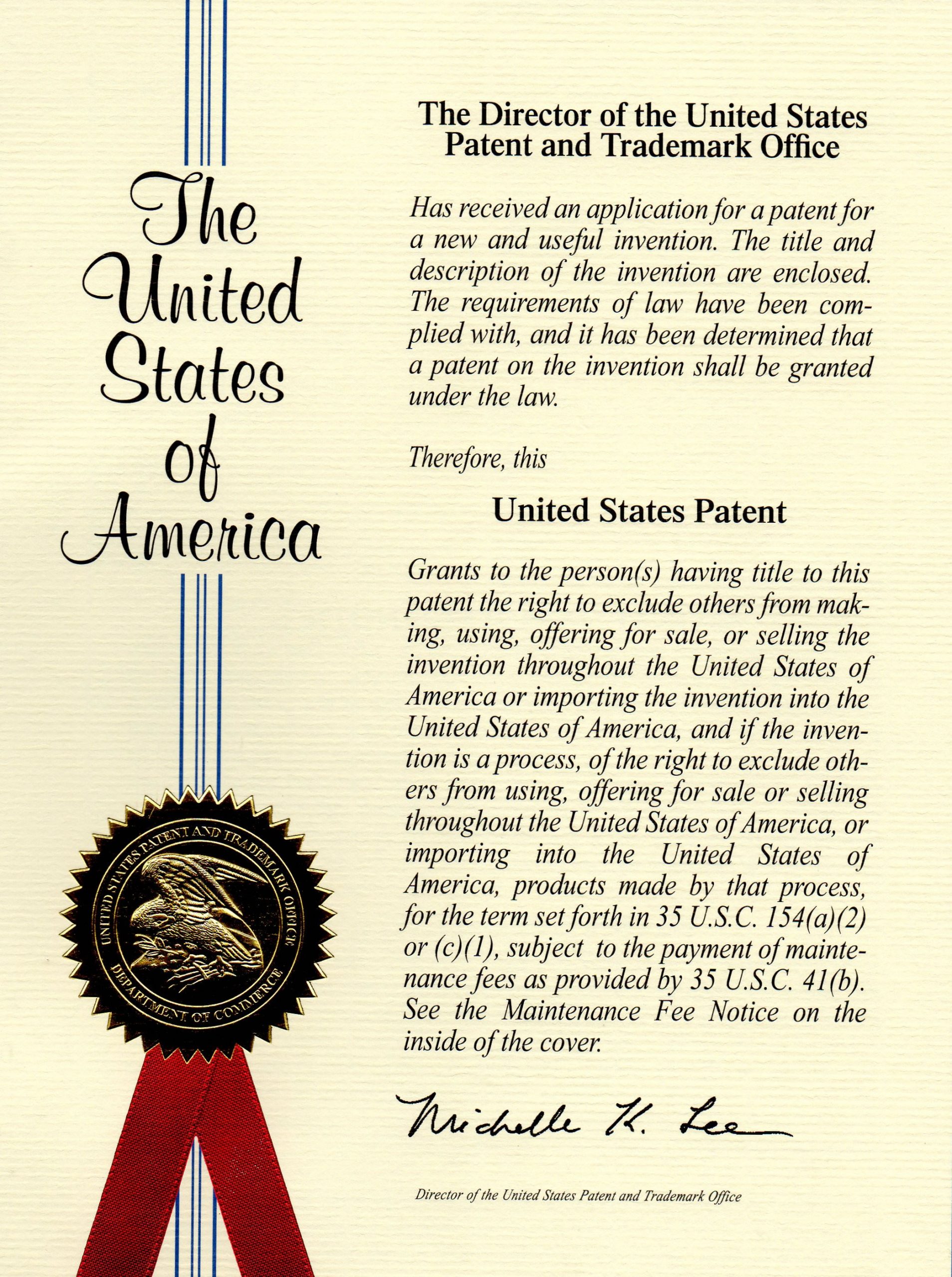
Your US patent, US 12,438,458 B1, “Power supply with vacuum diode,” was granted on October 7, 2025. (Congratulations on the first anniversary of the patent!)
The patent describes, among other elements, a vacuum diode, specialized ceramic materials, magnets, and pulse control. I assume that some or all of these elements may be relevant to the core of the 100 W E-Cat, although I recognize that the patent does not necessarily disclose the complete commercial design.
I envisage the following service procedure for a 100 W unit in the event of a failure:
You have previously confirmed that individual 100 W units can be removed from an assembly containing several such units.
When a unit is reported to have failed, the customer orders a replacement from the national E-Cat distributor. The replacement is dispatched in dedicated protective packaging.
The faulty unit is removed by the customer or an authorized service technician, following the manufacturer’s approved safety and service instructions.
The replacement unit is installed, and the faulty unit is returned to the national distributor in the same protective packaging, minimizing downtime.
If the sealed core is designed to be replaceable at distributor level using specialized tools, the distributor could replace it in his workshop. The remaining electronics could then be inspected and tested using a dedicated test fixture, allowing the refurbished unit to be prepared for another customer.
The sealed core itself would remain unopened and be returned to the nearest authorized manufacturing facility for inspection or refurbishment.
During the warranty period, a replacement required because of a covered defect would be supplied without charge to the customer. After the warranty expires, the customer could receive a replacement at a substantial discount in return for the defective unit.
Such a system could potentially reduce downtime, limit service costs, support the reuse of components, and create a practical role for national distributors and authorized service partners.
Do you consider this type of modular replacement and refurbishment system technically and commercially feasible for the 100 W E-Cat?
Ecat Enthusiast:
Surely it will be necessary a periodic maintenance: this issue will need to be learnt by experience, now I am not able to answer,
Warm Regards,
A.R.
Dear Readers:
I am praying for the fast and complete healing of our Pope Leone XIV, and hope I am doing this together with all our Readers,
Warm Regards,
Andrea Rossi
At the global presentation, will you please clarify the electrical the detailed connection protocol for customers who want to build their own custom systems using multiple E-Cat/NGU units?
In particular, will the datasheets or O&M manual specify how units may be connected in series and/or parallel, and the required interface to customer-supplied DC/DC converters, inverters, batteries, or other power electronics?
This information would be very useful to system integrators who intend to design products around the E-Cat rather than purchase only a complete finished system.
Dr. Rossi:
Interesting about the estimated payback time and lifespan of the Ecat 100 W. Can you clarify about the expected lifespan: will there be recharging required during the 15-20 years, or does it mean that one charge lasts 15-20 years?
Regards, Ecat Enthusiast
Arisa:
To answer precisely is necessary to compute the exact price, that will be disclosed after the presentation; to give you a ballpark answer, I’d say that the payback timespan using the Ecat 100 W 24/7 should be around 2 years; expected lifespan: 15-20 years,
Warm Regards,
A.R.
Dr Rossi,
The new updated prices of the Ecat will anyway guarantee a strong convenience ? For example: considering the SSM, which is the pay-back timespan ? And which is the expected lifespan ?
Cheers,
Arisa


I liked the reference to Dante Alighieri yesterday !
JPR
Hi Dr Rossi
I have been impressed by the home page of
http://www.drandrearossi.com
Axil:
Thank you for your suggestion,
Warm Regards,
A.R.
https://www.youtube.com/watch?v=jFA4hyVpCQ4
When electricity first emerged as a technology, Edison and Tesla clashed in the “war of currents,” arguing over whether alternating current (AC) or direct current (DC) should be the global standard of electricity. While AC won that battle, it’s become clear that DC is more efficient than AC at many modern-day tasks. Let’s take a closer look at how industries and grids across the world are switching to DC.
Don’t allow the Ecat to miss out on the DC revolution.
Axil:
Thank you for your suggestions, but I am not able to answer so far,
Warm Regards,
A.R.
Rita:
Ignoring them: ” Non ragioniam di lor, ma guarda e passa” [ Divina Commedia, Inferno ( Third Canto, Verso 51 ) Dante Alighieri ].
Warm Regards,
A.R.
Dr Rossi,
How would you confront the attacks of your heaters ?
Rita
Dear Dr. Rossi,
One additional question concerns the level of system-integration information that will be available to OEMs.
There appears to be an important distinction between providing a complete multi-E-Cat system as a “black box” and providing qualified OEM integrators with sufficient information to optimize their own multi-unit systems.
An OEM would not need disclosure of the proprietary internal operating principles of the E-Cat. However, it would need to understand the engineering interface sufficiently to optimize both the electrical and physical configuration of multiple units.
In addition to the electrical information previously discussed, this could include permitted series/parallel configurations, grounding and isolation, input/output operating envelopes, transient and fault behavior, output variability, thermal requirements, physical spacing and mounting, cooling, connector requirements, serviceability, and any electrical, thermal, electromagnetic, or other interactions between neighboring units.
With this information, an OEM could determine an optimum number N of E-Cat units for a standardized conditioned and packaged power block, and then use M such blocks in parallel to construct larger systems.
The selection and cost of COTS conditioners, inverters, storage, protection, packaging and other balance-of-system equipment would properly remain the responsibility of the OEM.
Based on your experience developing large multi-unit E-Cat systems, are there important integration or packaging considerations that I have overlooked?
Will qualified OEM integrators be given sufficient system-level information to “look under the hood” of your multi-unit architecture, while of course preserving the proprietary internal technology of the individual E-Cat?
Finally, do you and your commercial partners envision independent OEMs developing their own optimized products around the E-Cat as an important part of the business plan?
Warm Regards,
Axil
Rolando Ruffo:
No,
Warm Regards,
A.R.
Axil:
Thank you for the suggestion,
Warm Regards,
A.R.
Dear Dr. Rossi,
At the global presentation, could you please clarify the electrical connection protocol for customers and system integrators who want to build custom systems using multiple E-Cat/NGU units?
In particular, will the datasheets or O&M manual explain how units may be connected in series and/or parallel, and how they should interface with customer-supplied DC/DC converters, inverters, batteries, or other power electronics?
This information would be very useful for those who intend to design their own systems around the E-Cat.
Warm Regards,
Axil
Dr Andrea Rossi,
Can you say how much of the Ecat in percentage will be manufactured by outsources and how much in your factories ?
Best,
Rolando Ruffo
Ambrogio:
Yes,
Warm Regards,
A.R.
Sam:
Thank you for the link,
Warm Regards,
A.R.
Jean Paul Renoir:
No,
Warm Regards,
A.R.
Dr Rossi,
Does the Ecat emit undesired heat during its operation ?
JPR
AI book review
Tapping the Zero Point Energy.
https://youtu.be/aU01OyJhsyY?si=WW3fQIX8JNv2XO7M
Steven Nicholes Karels:
Thank you for your suggestions,
Warm Regards,
A.R.
Craig Cassarino:
Thank you for your link: I totally share your sentiment,
Warmest Regards,
Andrea Rossi
Good afternoon Andrea,
Let Us Pray for Pope Leo XIV 🙏 | A Prayer for Our Holy Father
https://youtube.com/shorts/bbV3w5wBgRA?is=imzku_np9GNLhcl0
Warmest Regards
Craig
Dear Andrea Rossi,
Application of NGU Technology using Electric Vehicle (EV) Battery System.
Electric Vehicles such as Teslas have a Battery System capacity of 60 kW-hrs (or more). Most commuter applications use only 10% or less of the Battery System capacity.
The latest residential home charging system allow both charging of the EV and pulling energy from the EV Battery System to feed the Grid.
The cost of electricity varies greatly over the day. The highest cost is around 5 PM and the lowest cost is usually at night. Ration is about 4:1.
Assumptions
1. Permit the Grid to siphon electrical energy from the EV Battery System in the amount of 40% of the capacity of the EV Battery system.
2. Assume 10% is required for the daily commute.
3. The NGU charging system can only be used while the vehicle is stationary.
4. The Workday is 8 hours (8:00 AM through 4:00 PM).
5. Plug in the NGU charge at work upon arrival and then remove when departing work location.
Daily Charge: 40% + 10% = 50%
50% of 60 kW-hrs = 30 kW-hrs
NGU Charging power = 30 kW-hrs / 8 hrs = 3.75 kWs
When the EV returns home, plug in the Home charger and the Grid draws energy at the premium reimbursement rate.
Dr Rossi,
Still alive the hope to see a global presentation by February 2027 ?
Ambrogio
Svein:
Thank you for your suggestion,
Warm Regards,
A.R.
Dear Andrea,
I refer to your recent reply to @Ecat Enthusiast concerning periodic maintenance. I would like to suggest a possible maintenance and replacement system.
Your US patent, US 12,438,458 B1, “Power supply with vacuum diode,” was granted on October 7, 2025. (Congratulations on the first anniversary of the patent!)
The patent describes, among other elements, a vacuum diode, specialized ceramic materials, magnets, and pulse control. I assume that some or all of these elements may be relevant to the core of the 100 W E-Cat, although I recognize that the patent does not necessarily disclose the complete commercial design.
I envisage the following service procedure for a 100 W unit in the event of a failure:
You have previously confirmed that individual 100 W units can be removed from an assembly containing several such units.
When a unit is reported to have failed, the customer orders a replacement from the national E-Cat distributor. The replacement is dispatched in dedicated protective packaging.
The faulty unit is removed by the customer or an authorized service technician, following the manufacturer’s approved safety and service instructions.
The replacement unit is installed, and the faulty unit is returned to the national distributor in the same protective packaging, minimizing downtime.
If the sealed core is designed to be replaceable at distributor level using specialized tools, the distributor could replace it in his workshop. The remaining electronics could then be inspected and tested using a dedicated test fixture, allowing the refurbished unit to be prepared for another customer.
The sealed core itself would remain unopened and be returned to the nearest authorized manufacturing facility for inspection or refurbishment.
During the warranty period, a replacement required because of a covered defect would be supplied without charge to the customer. After the warranty expires, the customer could receive a replacement at a substantial discount in return for the defective unit.
Such a system could potentially reduce downtime, limit service costs, support the reuse of components, and create a practical role for national distributors and authorized service partners.
Do you consider this type of modular replacement and refurbishment system technically and commercially feasible for the 100 W E-Cat?
Thank you for your consideration.
Warm regards Svein
Svein:
Thank you for the link,
Warm Regards,
A.R.
Dear Andrea
I allow myself to agree with a number of statements about the need for connection specifications that Axil has recently presented.
As an example of something close to the same, I can refer to:
https://www.fronius.com/en/help-center/solar-energy/products/solar-inverters/gen24/primo-gen24-plus/fronius-primo-gen24-6-0-plus
Regards Svein
Ecat Enthusiast:
Surely it will be necessary a periodic maintenance: this issue will need to be learnt by experience, now I am not able to answer,
Warm Regards,
A.R.
Thank you for your suggestions,
Warm Regards,
A.R.
Dear Readers:
I am praying for the fast and complete healing of our Pope Leone XIV, and hope I am doing this together with all our Readers,
Warm Regards,
Andrea Rossi
Dear Dr. Rossi,
At the global presentation, will you please clarify the electrical the detailed connection protocol for customers who want to build their own custom systems using multiple E-Cat/NGU units?
In particular, will the datasheets or O&M manual specify how units may be connected in series and/or parallel, and the required interface to customer-supplied DC/DC converters, inverters, batteries, or other power electronics?
This information would be very useful to system integrators who intend to design products around the E-Cat rather than purchase only a complete finished system.
Warm Regards,
Axil
Dr. Rossi:
Interesting about the estimated payback time and lifespan of the Ecat 100 W. Can you clarify about the expected lifespan: will there be recharging required during the 15-20 years, or does it mean that one charge lasts 15-20 years?
Regards, Ecat Enthusiast
Arisa:
To answer precisely is necessary to compute the exact price, that will be disclosed after the presentation; to give you a ballpark answer, I’d say that the payback timespan using the Ecat 100 W 24/7 should be around 2 years; expected lifespan: 15-20 years,
Warm Regards,
A.R.
Dr Rossi,
The new updated prices of the Ecat will anyway guarantee a strong convenience ? For example: considering the SSM, which is the pay-back timespan ? And which is the expected lifespan ?
Cheers,
Arisa